"In order to write about life, first you must live it." ~ Ernest Hemingway

Category: autoimmune disease (Page 12 of 19)

The Paleo Lifestyle

I have made a grave oversight. I was planning on writing an update today on how the Paleo lifestyle (I hate the word “diet”) has been going for me. I was scrolling through my blog posts to see what I wrote during my first Paleo blog entry and guess what? I never wrote one!

I meant to, I really did. But I started my thirty days of a strict autoimmune Paleo lifestyle the day before my fiancĂ©’s mother died and it was not the priority. So now I am going to give you the recap of the past two months.

I am not going to spend much time describing the Paleo eating plan because a Google search can give you more information than you ever could possibly want. Basically it means that you eat whole, non-processed foods just like our ancestors did. Meats, vegetables, fruits, nuts, seeds, certain natural oils such as olive oil and coconut oil. No dairy, grains (even gluten-free grains are off limits), legumes, sugar (except naturally occurring sugars in fruits), soy, and refined seeds oils such as sunflower, vegetable, and corn oil.  Now, I had done a ton of research about this for a good five months before I even attempted changing my eating because I was going to go one step further. I was going to do the autoimmune protocol of the Paleo lifestyle which meant I was eliminating nuts, seeds, eggs, tomatoes and all tomato based products, eggplant, alcohol, potatoes, peppers, and certain spices that are pepper based such as chili powder.

Have I mentioned how much I LOVE potatoes? And gluten/dairy-free pizza??

So I embarked on my little experiment and after the thirty days, I decided to add seeds and nuts back into my diet. Adding one food back in at a time from the autoimmune protocol list is allowed so that you can see what you can tolerate. From time to time, I will also have a pepper based spice because I absolutely love buffalo chicken; which I make at home.

I will be honest, this lifestyle change has been one of the hardest things I have ever done in my life and trust me, I have had my challenges! I went through terrible sugar withdrawals the first two weeks or so and I found it very challenging to eat anywhere besides in my own house. However I was reading anecdote after anecdote of people with autoimmune disorders who were having improvement in their symptoms by eating a Paleo food plan. If there was even a chance that I could avoid going back on steroids or maybe even become more functional because of what I was eating, I had to stick with it. The Paleo lifestyle is also not just about what you eat. It’s also about moving your body, attempting to reduce toxins in your environment, and cutting back on stress.

Before I started the Paleo lifestyle, I had been eating gluten and dairy-free for a year. While I do think that helped a bit with my symptoms, it wasn’t enough. However when I look back to what I was eating, a lot of it was processed dairy and gluten-free foods. I stayed away from anything high in fat because I wanted to lose weight. I would eat a whole bowl of rice for lunch on many days. A food that probably spiked my blood glucose levels. If you are interested in the Paleo concept, I suggest that you do some research on what causes people to get fat and unhealthy. It is not the 85% ground beef you are eating, but rather the copious amounts of starches and sugars we eat in processed foods. There is a lot of scientific theory to it and rather than pretend to know exactly everything behind it, I am going to refer you to two books that I found extremely helpful: The Paleo Solution by Robb Wolf and Practical Paleo by Diane Sanfilippo, BS, NC. And again, there is always Google!

Bottom line is that I have learned fat is not the enemy. I will admit, I am still skeptical about the whole concept, but I am going for routine blood work next month which also screens my cholesterol, triglycerides, etc. so I will be interested in seeing the results of that blood work.

I guess one of the biggest questions I get is what do I eat? I eat a LOT of fruits and vegetables and I eat a lot of meats including beef, pork, chicken, turkey, fish, and on occasion, bacon. I now eat nuts and seeds including cashew butter, sunflower butter, etc. I cook and eat only coconut and olive oil as much as possible. Some Paleo enthusiasts say you should watch your fruit intake if you are trying to lose weight but I feel strongly that I need the nutrients of the variety of fruits that I eat and my primary goal right now is to be healthy. If I lose weight, great. If not, oh well.

I have had to completely retrain my way of thinking in terms of meals. No more cereal, pancakes, or yogurt for breakfast. Often I have leftovers from dinner the night before. The variety of food I have tried in the past two months has increased by at least fifty percent. I have discovered a love for sweet potatoes and a hatred for avocados. As often as possible, I eat grass fed and wild caught meat and fish in order to avoid hormones and other nasty things that grain fed animals eat. Eating out is even more of a challenge than when I was only restricting my gluten and dairy intake but is getting easier. We don’t eat out all that often but when we do, we chose a place that will not think twice about accommodating my needs. I have to say that I actually enjoy eating out more now because I am eating higher quality food as opposed to fried and processed food.

Overall, I would say that I am about 75% compliant with eating Paleo in the past month. After the first month, I realized that I had to make this a lifestyle which meant making it doable. Progress not perfection became my motto. Most Paleo proponents state that the goal should be to be eating Paleo 80% of the time. Although my basic diet is meats, vegetables, fruits, nuts, and seeds, I do indulge in a regular meal or food from time to time but I make sure it is something I will absolutely enjoy every bite of. For example, last week I was on a six day course of steroids for non-autoimmune reasons and I decided I had to have a buffalo chicken pizza from a local establishment. And a regular beer to go with it. Typically, when I eat something non-Paleo, I still make sure it is gluten and dairy-free but I needed that one exception on that particular day. I enjoyed it and the next morning, I was right back on track. Some people may say that I am not doing the autoimmune protocol properly. I say that I am living my life.

I did a little experiment several weeks ago where I went off my Paleo eating plan. My fiancĂ© and I were going out of town to visit family and I wanted a weekend where I didn’t want to have to think about what I was going to eat. I even ate macaroni and cheese! After several days of that, I can honestly say that I was ready to go back to Paleo. My joints hurt more than usual, I felt like I had the flu, and I was craving salads.

The bottom line is: Overall, I am eating healthier than I ever have in my entire life. I cannot remember the last time I had a bowl of rice and I don’t even miss it anymore. I am feeding my body whole, nutritious foods. And I have lost weight. Not a lot, maybe a pound every two weeks but what has been more noticeable is the change in my body shape. Fat is turning to muscle. I don’t feel bloated anymore; unless I eat buffalo chicken pizza!

More importantly, let’s talk about my autoimmune symptoms. First I have to disclose than I am also taking a new alternative medication called low dose naltrexone (LDN) which I think has also benefited me so it is hard to ascertain if the improvement is due to my diet, allergy shots I have been receiving, the LDN, or most likely, all of the above. I am currently off steroids and my other autoimmune medication, Arava. That fact is simply amazing. I do have some joint pain but this is precipitated by exercise and/or not enough sleep. My dryness symptoms have improved somewhat which was recently noted by my eye doctor. My asthma is under control and the biggest change I have noticed is an improvement in my reflux and esophageal dysmotility symptoms. Fatigue, unfortunately, is still a major issue at times. I have not noticed any improvement in my Raynaud’s symptoms. I still struggle day to day much more than the average person without an autoimmune illness but at this point, I am struggling less than last year at this time.

Now could all of this be coincidence? Possibly. Maybe I am just in an upswing with my illness. But I am going with the theory that time will tell and meanwhile, I have absolutely nothing to lose.

The Smell of the Sheets

I went to lie down on a stretcher this morning and as I got comfortable on my back and waited for the radiology technician to come back in the room, I was struck by a smell. A familiar smell. One that prompted my brain to flash various images through my head, one right after the other. Images of different procedures, some painful and some not. Images of myself sitting in a hospital bed in various rooms throughout this particular hospital where I was having my test done. Images of  emergency rooms where I have sat.

What was this smell? I finally realized, while laying on the stretcher this morning, that it was the smell of the hospital sheet covering the stretcher. All of a sudden, I realized that the smell of the hospital sheet is as commonplace to me as the smell of fresh baked cookies or bread to someone else. It is very distinct. The smell was representative of all the stretchers I have laid upon in the past several years. There are too many to count. The sheets have laid below or on top of my struggling body as I have tossed and turned in the middle of the night in my hospital room, while I have vomited on an emergency room stretcher, and while a tube has been put down my airway and into my lungs during a procedure. The smell of the sheets symbolizes my life as a patient.

I realized as I was laying there this morning that I had not smelled the sheets in exactly three months, which is when I had my last procedure or test done, excluding laboratory tests. This particular test on this morning was an ultrasound of my kidneys and bladder and was painless, as well as easy for me. Basically a walk in the park. No needles, no gagging, no fear of the unknown, as I have encountered with so many other tests and procedures throughout the past few years. But the smell of the sheets reminds me of those times and the struggles I have had.

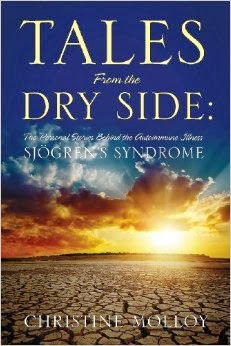
Last fall I made a very thought out decision to see a therapist/counselor who has a specialty in seeing people with chronic illness. I was at the point where I felt like I needed some help in learning how to cope with my illness and the multitude of issues surrounding being forty-one years old and disabled. I did not like the fact that my illness seemed to consume most of my conversations with my fiancĂ©, friends, and family. I was finding it harder and harder to discuss anything else besides my symptoms, treatments, fears, and anxiety. I wanted more out of my relationships than that. Easier said than done when you have an illness that you are physically aware of almost every minute of the day. It wasn’t that I did not want to learn more about Sjogren’s, continue my book about it, or socialize with other Sjogren’s sufferers, but rather I wanted to find a way to have Sjogren’s be a part of my life instead of the focus of it.

I was also starting to struggle with significant anxiety in relation to upcoming procedures and I was having nightmares about them as well. Not surprising considering what I have gone through in the past couple of years and even before that with my lymphoma diagnosis, both in regards to procedures and medical experiences in general. I have had incisions made in the tops of my feet and had thin wires threaded up along the lymph vessels of my legs. I have woken up during a bronchoscopy because I was not properly sedated. I have had scary experiences with my heart in the emergency room and honestly thought I was going to die. The list goes on and on.

So I have been working diligently with this therapist. I have not mentioned, previous to this posting, this fact to many people. Actually only my fiancĂ©, parents, and minister have known. I have not kept it to myself because I am embarrassed about seeing a therapist, but I guess I did not want people to know exactly how much I do emotionally struggle with having this illness. I want to be viewed and known as a warrior; a person who can handle all this illness business without much difficulty.

Yeah, I know. That’s crap. It’s the people who know they need help that are the warriors.

I have realized recently how much working with this therapist has helped me. Many times when people have trauma issues of any type, there are certain triggers that can bring back memories and feelings surrounding the traumatic event. For me, sometimes it is the smell of the sheets. The smell that brings back those images and reminds me of the pain, fear, and uncertainty that surrounds each difficult medical event. But this morning was much different when I recognized the smell of the sheets. When the smell prompted me to play back some of the difficult procedures and medical experiences I have had, mostly over the past year, I did not have the anxiety. Rather, I remembered them just as events that took place. Events that are a part of my journey. Were the events unpleasant? Yes. But the memories no longer haunt me while I sleep.

Therapy has also made a difference in my interpersonal relationships. Sjogren’s is still a part of my conversations at times. It needs to be as it is part of who I am. However I have recently found myself able to consistently focus on other aspects of my life in conversations and dealings with others. Because despite my continued physical struggles, I no longer think of myself primarily as a sick person. Instead, I think of myself as a person who has an illness. There is a huge difference. That difference actually made me realize something about one night last week. I had attended a social event with my fiancĂ© and five friends that lasted about four hours. Not once in that time of conversing and socializing did the topic of my health come up. That is a very good thing. Not because I don’t ever want to talk about it or have people ask how I am doing but because it means that I have been able to have a life outside of Sjogren’s.

The smell of the sheets this morning transported me back in time to my struggles, but not to my anxiety and fear. This time the smell was a strong reminder to me of my strength and my ability to endure. It reminded me that yes, I am a patient. But that is not all I am. And so I have chosen to share this experience with you. To remind you that you don’t always have to be brave and you don’t always have to be strong. It is OK to ask for help. It is OK to be human.

Low Dose Naltrexone Update

It’s Saturday morning and a perfect time for blogging. Life has settled down quite a bit here over the past few days. Life has been nothing but complete chaos and stress since about November and despite the fact that I think I have handled the stress fairly well, I am praying for no more crises for at least the next few months. The rest of the year would be nice too!

I have been playing catch up this past week with a lot of things I have neglected as of late, namely wedding planning, housework, and agent hunting for my book. More importantly, I have been trying to catch up with those friends and family that I have been neglecting and I am slowly but surely accomplishing that. I also have a list of health related blog topics in my head that I really want to write about as there has been so much going on and I think that the experiences I have been having might be useful for people to read about.

I think today I am going to start with an update about how I am doing with taking low dose naltrexone (LDN). I have been getting e-mails from people asking me if the LDN is working, if I am having any side effects, etc. The first post I wrote about LDN you can find here: Low Dose Naltrexone. If you have an autoimmune disorder, I think the post is worth a read. LDN is also being used for other illnesses other than autoimmune diseases but I try to write about what I know based on my experience and that experience is with taking LDN for Sjogren’s syndrome.

When I wrote the first blog entry about LDN, I was five weeks into taking it. Now I am about ten weeks into it. Since the five week point, I have been able to completely finish weaning off of prednisone. This was no small feat mind you. I had been taking prednisone for about fifteen continuous months, with the exception of one month where I had weaned off and had to go back on it. I did have some difficulty coming off the prednisone and the withdrawal symptoms were tough for the first two weeks or so, but my body seems to be slowly adjusting.

Before I came off the prednisone, and while on LDN, there was a period of about three weeks where I was feeling amazing. I mean, AMAZING! I went into my rheumatologist’s office for a routine appointment and told her that I had not felt that way since before all this autoimmune fiasco began, which was five years ago. Can you imagine feeling like yourself for the first time in five years?!? It was incredible.

However of course that did change when I stopped the prednisone but I am trying to be patient and give my body the time it needs to adjust. Part of thinks that it would have been nice to not have messed with the prednisone and enjoyed feeling good for a while longer. However the other part of me felt stronger that I did not want to be dealing with prednisone withdrawals and possible flare up issues closer to my wedding, which is three months away. This weekend it will be one month I am off the prednisone and that is usually my tipping point for things to go awry so I am crossing my fingers. Speaking of awry, at this point I am only having two issues, severe itching and hair loss. I thought the issues were related to coming off prednisone or perhaps even related to an autoimmune flare starting, but it appears this is probably not the case. I will hold off on the details of that situation for now until I have more information.

Overall, I think the LDN has had a positive effect on my autoimmune symptoms. When I came off the prednisone, my migraines initially got worse but are improving with the help of a supplement I was given by my integrative medicine doctor called petadolex. I have begun to have some minimal joint pain in the mornings that quickly goes away but other than that, I seem to be holding steady in regards to my pain levels. I have managed to wean off my steroid inhaler and currently take no medications for my autoimmune related asthma. That is a big deal. I am off my prescription migraine medication, another autoimmune medication called Plaquenil, and a medication that was being used to stimulate saliva called pilocarpine. I have noticed a small improvement in my dryness symptoms. My use of pain medication and Motrin has decreased.

I am able to do short periods exercise on a regular basis and am having less painful after-effects of the exercise as compared to before LDN. With the exception of the time period after I stopped prednisone, I have noticed an improvement in my mood and anxiety levels. I have not noticed any improvement in my esophagus/swallowing issues since starting the LDN. I had a few meals where I forgot to take my Procardia, which enables me to swallow more easily, and I immediately regretted not taking the medication. The LDN also has not made a difference in my reflux issues. The debilitating fatigue that I experience improved initially but I have been struggling with my energy levels since coming off the prednisone.

The only side effect I have noticed from LDN is insomnia. It has improved over the past month to the point that I am willing to continue riding out the side effect because the benefit is worth it right now. I am experimenting with some different natural solutions to this problem and it is also worth noting that I was having some insomnia issues prior to starting LDN.

So that is the scoop. I do have to mention that in addition to starting LDN, I have also begun going for allergy shots every week and have drastically changed my diet to an autoimmune protocol of the Paleo diet. However I did not start either of these treatments until after I had that three weeks of feeling great so I do strongly believe that the LDN has been a contributing factor in some of the improvements I have experienced. I am still on 3mg and am holding off on going up to 4.5mg until my insomnia is more under control as lack of sleep is a huge trigger for autoimmune symptoms.

Am I still skeptical? Sure. The improvements I have had could be a fluke but I don’t think so. I do think it is a situation where time will tell for sure. My goal is for LDN to keep me off the steroids. If that is the only benefit I get, it will be worth it’s weight in gold.

Road To Marriage

 
“Become the kind of person the kind of person you would like to marry would like to marry.” ~ Douglas Wilson

Four months from this Friday I will be getting married.
A whole wedding and everything.

This is a big deal.

I know marriage should be a big deal in general, but let’s be honest. In our society today, people get married and divorced more often than many people change jobs. My fiance and I have both been married before so now we are going to be included in the second marriage statistic. You know, the one that says half of all second marriages will end in divorce.

We will not be on the wrong side of those statistics. I’m sure everyone in love says that right before they get married again. Truth be told, I was fine with never getting married again. That was before I met a partner who made me experience real love for the first time.

That is a strange thing to say considering I was married once before and engaged to someone else even before that. My first fiance was this great guy I met at work when I was about twenty-three years old. We started out as co-workers and then became friends. We dated for a while, I moved into his house, we talked about marriage, I got cancer, he proposed, and then four months before the wedding, the bomb dropped.

He told me that he had come to realize that he never truly loved me and had only proposed because I had just finished my cancer treatments and he felt like he was obligated to propose. That is was what he was “supposed” to do. He should have said something sooner he told me.

Nice.
Problem was, I still loved him.

So I moved out of the house, sought refuge at my parent’s home because I was such an emotional wreck and spent the following weeks cancelling all the wedding plans that were already in place. To this day, I do not think he was a bad person. Confused and gutless yes. But not bad. After a while, I decided I was too young to pine away for a man who would never love me. I found my own apartment and continued to throw myself into my career, my family, and my friends.

Enter the next love. My ex-husband. I met my ex-husband approximately eight months after the break up with the ex-fiance and I did not date anybody in between. I am here to tell you that is a big mistake. I would have sworn to you up and down that I was not on the rebound and maybe I wasn’t. I was twenty-eight years old and all of my friends were getting married and having babies. Now I absolutely thought that I loved him and that he loved me but now looking back, I wonder if subconsciously, I was more in love with him or the idea of being in love with him and having the life society tells us we are supposed to have. You know, the one with 2.2 kids and a white picket fence. Because there were signs there that maybe he was not the right person for me but I did not pay attention to those red flags. I wanted to spend my life with someone and raise a family. I thought this was the way to be happy. Tough thing to admit.

Approximately a year after we got married (we had dated for two years prior to getting married), my ex-husband changed in a way that resembled Jekyll and Hyde. He decided that he did not want children after all. His mood started to change dramatically at times, he developed flashbacks, and he was subsequently diagnosed with post traumatic stress disorder (PTSD) which was a result of severe childhood abuse. Then the heavy drinking started and the only thing more difficult than living with an alcoholic, is living with one that has PTSD.

I tried and I tried as hard as I could to keep my marriage together. Eight long years of trying. I certainly made my share of mistakes during my marriage but none that warranted the way I was treated. I thought that if I loved him enough, he would be able to work through his issues, we would have a family and be happy. Instead, I became an emotionally abused wife. The day that he became violent and I thought he would hit me, I began the journey to becoming his ex-wife.

It was not easy, but I have never looked back.
I was finally free.

Despite the fact that the year prior to separating with my ex-husband I began to get very sick from autoimmune related issues, my life really started to evolve. I took control of my life. After we sold our house, I took one of our dogs, moved into my own apartment and discovered I truly enjoyed living by myself again. No chaos. I spent the following two years figuring out who I was as a person and reshaping my definition of what it meant to be happy and that it did not have to include being married, or even having a partner for that matter. Being happy did not depend on whether I was a mother or not. In that quest to find myself, I truly became happy.

I reconnected with my old friends and I made new ones. I began to write and pursue other interests when I wasn’t dealing with my significant medical issues.. I became involved with my church. I dated quite a bit. I even fell for a guy or two. However after a while, I found dating to be exhausting. As a thirty-nine year old with a severe chronic illness, dealing with the drama associated with dating just became too much. Too many liars, cheaters, and men with severe issues. It wasn’t worth my precious energy. I decided that I was going to be content with living on my own, in a great apartment, with my very cool dog and my wonderful family, friends, and church community surrounding me. I had my head on straight now and I was not going to compromise my happiness, health, or peace of mind for anyone else.

Best laid plans, right?

Then enter Chuck. What is it that they say? That love often happens when you are least expecting or looking for it? If you are interested, you can read our story here: Summer of Friendship…Summer of Love.

I knew within weeks of dating Chuck, that I would spend the rest of my life with him. I didn’t care if that involved marriage. I just wanted to be with him. He had become my best friend and it quickly became apparent to me that I could not imagine spending one day without him in my life. It was a big risk for me and maybe he would say the same thing for himself. The risk of loving again after you have been hurt so deeply in the past is probably one of the biggest acts of courage a person can perform. The difference for me this time though was that I knew I was with the right person. I knew what true love felt like.

The type of true love that makes you want to be an even better person than you already are. The type that supports you and encourages your dreams. The type that makes you want to work through all the very difficult questions and differences between you.The type of love that is ultimately unconditional.

I think I just wrote part of my wedding vows.

I am the woman who said she would never get married again but yet, here I am. Older, wiser, and with eyes wide open. I am the woman who is very glad to be a stronger, confident, and more self aware version of her younger self. One who, when she stands in front of her family and friends committing her life to another on May 18th, will know, with all certainty, that it is possible for marriage to last forever.

Low Dose Naltrexone

In my last blog entry I discussed my current experiences with an integrative medicine doctor. (Going Down the Road of Integrative Medicine). In that entry, I mentioned a new medication I was prescribed by this doctor called low dose naltrexone (LDN) and I think that it is worthy of its very own blog entry so here we go. Be forewarned, it’s a bit complicated…

Since we have the modern day miracle of Google, I am not going to spend a lot of time describing LDN and exactly how it works, but I think there are some basics that are important. Naltrexone is a medication that was created in the late 1970’s as a treatment for heroin overdose and subsequently used in larger doses (50-300 mg) to treat heroin addicts. It blocks the opiate receptors in our body, which are also found on immune system cells. The next discovery, in the 1980’s, was that naltrexone at lower doses (hence why it is called low dose naltrexone), blocks these opioid receptors and increases the endorphin levels in the body, which were noted to be low in people with autoimmune disorders as well as in many other illnesses, such as cancer and AIDS. At lower doses, such as 3-4.5 mg, the LDN blocks the opioid receptors for a short time, a few hours. Once this blockade wears off, the body responds by increasing its production of endorphins and this results in cellular changes that inhibit cell growth, inflammation reduction, and healing. It is not an immune booster or suppressor, but rather an immune regulator.

OK, whew. That hurt my head. I have found two books to be extremely helpful in understanding LDN. The  first is: The Promise of Low Dose Naltrexone Therapy by Elaine A. Moore and Samantha Wilkinson and also Up the Creek with a Paddle by Mary Boyle Bradley.

Now, when my integrative medicine doctor told me that he wanted me to try this medication, he did not make any promises or unrealistic claims about its effectiveness. He did refer me to the website:
http://www.lowdosenaltrexone.org/ for more information. However after scouring this website, I became skeptical about the medication. I had a hard time believing that one medication, as seemingly harmless as this one, could effectively treat all the diseases that it claimed it could: autoimmune disorders, many types of cancer, and AIDS. Because if it was that effective, why were so many people still sick? Why didn’t more doctors and patients know about it?

After about a month of online research and reading the above two books, I had to admit that I was very intrigued by the positive effects LDN was having on some people with autoimmune illnesses, specifically multiple sclerosis (MS). Sjogren’s syndrome and MS can share an uncanny amount of similarities in terms of symptoms and many people with Sjogren’s are originally misdiagnosed as having MS. I also read many anecdotes about the success of LDN on other autoimmune illnesses such as Crohn’s disease and rheumatoid arthritis.

So WHY don’t more people know about this? Many proponents of LDN therapy claim that it is seen as an alternative therapy and that its use is not widely recognized because there is not enough clinical research done on the positive effects of the medication. There have been some small clinical trials done at a few very noteworthy medical institutions, but it has not been studied on a large scale. Why not? Well, pharmaceutical companies fund these trials and naltrexone is a generic, very inexpensive medication to produce. According to LDN proponents, there is no financial incentive. Despite the fact that this may sound like a conspiracy theory type of thing to a lot of people, with my less than favorable experiences in regards to the pharmaceutical industry, it all makes sense to me.

As I see it, there are two issues with LDN. The first is that the one major side effect it has is insomnia. This is something I have been struggling with significantly since last Spring, possibly due to another medication called Topamax. The second issue is that because it blocks opioid receptors, you CANNOT take any narcotic pain medications while taking LDN. If you do, you have to stop the LDN. Luckily, my rheumatologist is not a big fan of using narcotics to treat Sjogren’s related pain issues and I have adverse reactions to many narcotics anyways. Because of this, I have worked hard at learning and utilizing other pain management techniques. When things are really bad, I do resort to a pain medication called Tramadol. Because of its mechanism of action, Tramadol is a centrally acting analgesic, rather than a true narcotic. However I was instructed that if I do take Tramadol, to space it four hours apart from my nightly LDN dose.

LDN is routinely taken between 9pm-2am although some people say that it can be taken in the morning. However since endorphin production is highest around 2-4am, it is thought that this is the best timing for the highest effectiveness. LDN also needs to be specially compounded by a pharmacist and not every pharmacy does this. I get mine from Skip’s Pharmacy in Boca Raton, Florida. One month supply, not covered by insurance, costs me about twenty-five dollars with shipping.

So five weeks ago, after much trepidation and research, I decided to just go for it and I took my first dose of LDN. To begin with, the only side effect I have noticed is the insomnia and I will admit, it is pretty rough and worse than before I started the LDN. I have since weaned myself off of the Topamax, which I take for severe autoimmune related migraines, in the hopes that will help alleviate the insomnia. I already have a lot of alternative methods I use to help sleep such as meditation, herbal tea, etc. but like clockwork, I wake up between 1-2am every single night after going to bed around 10pm. Sometimes I fall back asleep and sometimes I don’t. However that all being said, I have been battling a bad viral infection this week and have been sleeping better. Not sure if that is because I am sick or not. Because sleep deprivation is a trigger for worsening of my Sjogren’s symptoms, before this week, I had been taking a sleep medication two to three times a week to help me catch up on my sleep. I was told by Skip’s that the insomnia should improve and possibly even go away within the next few weeks.

It is very hard to see a benefit from a medication like this when you have recently started other treatments as well. I started an autoimmune medication called Arava in October and an eye medication called Restasis in November. Except for a week exacerbation of joint pain on my third week of LDN, my joint pain has significantly improved and my eye doctor told me last week that my eye dryness has improved. LDN related? Possibly.

Since stopping my migraine medication, I initially had a week of migraines and they have since resolved. I am hoping it stays that way. If I continue to have a significant reduction in migraines or even complete resolution of them, I will absolutely attribute that to LDN because prior to LDN, I could not function without Topamax.

The improvement I have noticed, that I know cannot be attributed to other medication, is in my overall well being and my energy level. It is difficult to explain but does make sense considering LDN affects our endorphins. I feel more able to effectively cope with my physical symptoms when they do arise and my mood seems more stable. This is significant because I am still in the process of weaning off prednisone. There has also been a decrease in my anxiety level to the point that this week, I can say I have no anxiety at all. That is also significant as I am still waiting for some test results and this would naturally produce some anxiety for me.

At first, I did not see the improvement in my energy level. It was subtle. I also am not sure if it can be attributed to the Arava as well. Although I am still extremely fatigued by about 4-5pm each day, I have noticed that my days are becoming more productive. This is highly unusual, actually unheard of, when I am weaning off prednisone.

And that is where I am at five weeks into my LDN journey. In my head, the jury is still out as to how effective this treatment might be for me long term. I am hopeful.The signs so far are positive and I think time will tell; especially once I am completely off prednisone and hopefully the Arava as well. I also think that it is not a treatment that when used alone, will cure me. Rather, I think it is one more tool, along with exercise, supplements, diet, stress management, and multiple other modalities, that can be used in my long journey to improved health.

« Older posts Newer posts »