For Everything There is a Season

"In order to write about life, first you must live it." ~ Ernest Hemingway

Page 35 of 45

Drugs and Money

“Competition makes things come out right. Well, what does that mean in health care? More hospitals so they compete with each other. More doctors compete with each other. More pharmaceutical companies. We set up war. Wait a minute, let’s talk about the patient. The patient doesn’t need a war.” ~ Donald Berwick 

I am more disgusted than usual with the health insurance and pharmaceutical industries lately. Health care in this country is dictated by politics and money which of course in no way benefits the patient. However in an attempt to turn negative experiences into constructive information that may help other people, I am going to try and make this a blog entry more about empowering other consumers and less about my rant regarding the terrible demise of health care in this country. Because except for being an active, registered voter, I feel powerless about changing the health care situation in this country. However I do have some control over figuring out how to get my medical needs met and then passing that information on to other consumers.

I have a prescription steroid inhaler that has a copay of $50 per month which is considerably more than other inhalers on the market. The reason I need this particular inhaler is because it is the only steroid inhaler on the market for my autoimmune induced asthma that has been documented to not cause a fungal infection of the mouth called thrush. When using previous inhalers, I have had a terrible time with thrush spreading into my esophagus and causing complications which have included difficulty swallowing. Then I have to take potent antifungal medication to clear the infection. Since starting this new inhaler (Alvesco), I have been thrush free. This new inhaler is much more expensive and I think part of this is due to the fact that it is the only one like it on the market.

$50 may not seem like a lot to spend on something that works so well, but it is when you are on a fixed income, you have at least seven other prescriptions, and you spend approximately twenty-five percent of your income on medical care every single month. An income that is only sixty percent of what it used to be three years ago. I am not revealing all this information because I want my readers to feel bad for me. I actually hesitate to reveal these details because sometimes people (i.e. my well intentioned brother) take these comments as a statement that I do not have enough money to survive. So let me just clarify that I can manage. We all have to make choices in life and I manage because I make my medical expenses a priority. I get by month to month because I always look for the best ways to manage my medical costs and I am very good at managing my finances. I manage month to month because I am fortunate enough to share living expenses with someone who is always looking out for my best interests. I am quite blessed because I have a family behind me who would never let me go without a necessary medication and would do everything in their power to pool resources to make sure I have what I need. I know that there are patients out there who have no health insurance and minimal available resources to them.

But here’s the thing. I am fiercely independent now. Although getting sick and incurring these medical expenses is not my fault, it is my responsibility to figure out how to pull my weight in order for my boyfriend and I to manage our expenses. So when my steroid inhaler dose got increased recently and the insurance company started charging me a double copay every month ($100), I couldn’t just sit by and say “oh well, that’s how it works.” Because I never know when another unexpected medical expense is going to come from around the corner.

So what did I do? Well, I started by complaining about it on Facebook. This was a good idea because there were people on my friend’s list who had some helpful suggestions. I also contacted my pharmacy to see if they had any suggestions of how I could avoid the double copay. I went to the website for the Alvesco inhaler in the hopes of finding some type of discount program for this medication. They had a great discount program which would reimburse up to $75/each month towards my copay. Too good to be true? Of course! In the fine print it stated that because of state legislation, only one state in the union was ineligible for the discount program and of course that state was Massachusetts.

This all brought me to this morning which is when I decided to call the doctor who prescribes the inhaler and see if he had any suggestions. I spoke with his nurse who was quite helpful. We discussed a few options and came up with a plan. She said she would put aside the last two samples she had in the office of the inhaler for me to pick up tomorrow. Although she didn’t have any samples two months ago when I was there, she had them now. Lesson learned: ALWAYS call your doctor to check for samples! 

These samples would get me through to my next appointment with my pulmonologist next month during which time we could try and figure out if there was a way to rewrite the prescription so I only pay one copay. What the nurse suggested next though was even more critical. The nurse told me to see if I could use a mail order pharmacy through my insurance company. I had used one of these a long time ago, but haven’t investigated this option since being diagnosed with the autoimmune disease because my medications were changing on a monthly basis. Mail order programs give you a three month supply of the same medication at a time and that wasn’t practical for me. Then I pretty much forgot all about it. Now I have several medications that are the same dosage for periods of time so I decided to check out this option.

As luck would have it, my insurance does have a mail order pharmacy called Express Scripts. To be honest, I did a Google search of reviews for them and those reviews were not favorable at all. However after reading their website, I decided that at this point, the amount of money I was going to save was worth taking the chance with this company. The process was very easy. I called their 1-800 number and told them I wanted to start up an account and see if my regular medications were covered. Because they work with my insurance company, they already had my drug and doctor information. They would call the doctors for a new prescription for a 90 day supply of each medication. I told them which medications I wanted, double checked the doses, doctor names, and doctor phone numbers. They told me how much they would cost and how the payment process works.

For four of my medications I paid a two month copay for a three month supply of medications. The exception was one of my thyroid medications which is on a special discounted medication list and only cost me $3/month. By the end of the phone call, I had saved 40% on five different medications. The other advantage is that all of my reordering can be done online and I don’t have to frequent the pharmacy as often. That comes in handy when you are not feeling well. I am sure there are disadvantages to the program, but I am going to remain optimistic and hopeful that it will remain to be as easy and cost effective for me as it was today.

So those are some of my tips for saving money on prescriptions. The biggest point I want to make sure that I make here is to use your resources as wisely as possible. Contact your pharmacy, doctor, and insurance company. See what options are available and make sure to be open minded to what resources are available out there.

What ways do you have to save money on prescriptions?

From Abuse to the Promised Land

The first step towards getting somewhere is to decide that you are not going to stay where you are. ~ Unknown
Promised Land:  any longed-for place where one expects to find greater happiness or fulfilment.
 ~ The Free Dictionary

Did you ever work through some issue in your life and think that it was completely behind you until one day, it hits you in the face like a ton of bricks? That happened to me last weekend during my pastor’s sermon at church. I wasn’t expecting it. I was even the scripture reader for that day and it never dawned on me that his sermon based on that day’s scripture would bring me back in time; to a place that used to haunt me. A time that I have never written about privately, never mind publically. However in considering writing about this topic and posting it on the web, some glaring facts have became apparent to me.

It could help someone.
Make them feel less alone.
Give them hope.
And so here we are.

My pastor’s sermon this past Sunday was based on scripture from Exodus 14:10-14. In the sermon he discussed the relationship between Pharaoh and the people of Israel. These Jews, who were living in Egypt at the time, were being terrorized by Pharaoh who was the person ruling the land at the time. Not because they did anything wrong but because Pharaoh did not like working around Jewish holidays and practices. Pharaoh also heard a rumor about a new king being born to the Jews. And so began Pharaoh’s reign of terror. He controlled the Jews. He manipulated them. Moses intervenes and although things get worse initially, Moses finally tells the abused people of Israel:

“Do not be afraid. Be still.”

Then my pastor gets to the message of the sermon about people in violent and abusive relationships. He points out the similarities of Pharoah and the Jews to people in abusive relationships in the present day. About how the best approach to the “Pharaohs” in our lives is to be still, be at peace. It doesn’t mean to give in but to follow God’s lead in order to make it to the Promised Land. Why? Because as my pastor explained, it breaks the cycle of violence by not engaging our Pharaoh. He has no one left to control.

Oh crap.

I was sitting in my seat with the choir and all I wanted to do was run out of the church because I knew the sermon would make me cry and I didn’t want others to see that. I would cry with sadness and remembrance because I knew what it was like to have a Pharaoh. Cry with happiness because I knew I had finally made it to the Promised Land.

My Pharaoh was my ex-husband. I know that for certain now even though I didn’t always acknowledge it. Even when I did acknowledge this fact after I left him, there was still this small part of me that rationalized that I wasn’t in an abusive relationship. I couldn’t have been because I did my fair share of arguing and name calling when I was provoked by him. I was the one who was considered to be the control freak. As someone who feels strongly about taking responsibility for one’s own actions, I felt that even though my ex was usually the instigator, my own behavior was not always a model example, therefore he was not REALLY abusive. We just couldn’t get along.

Yeah right.

Something to be said for denial.

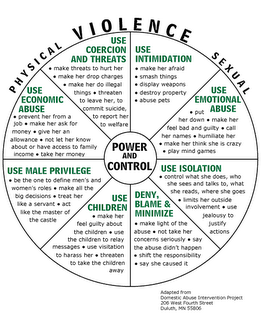
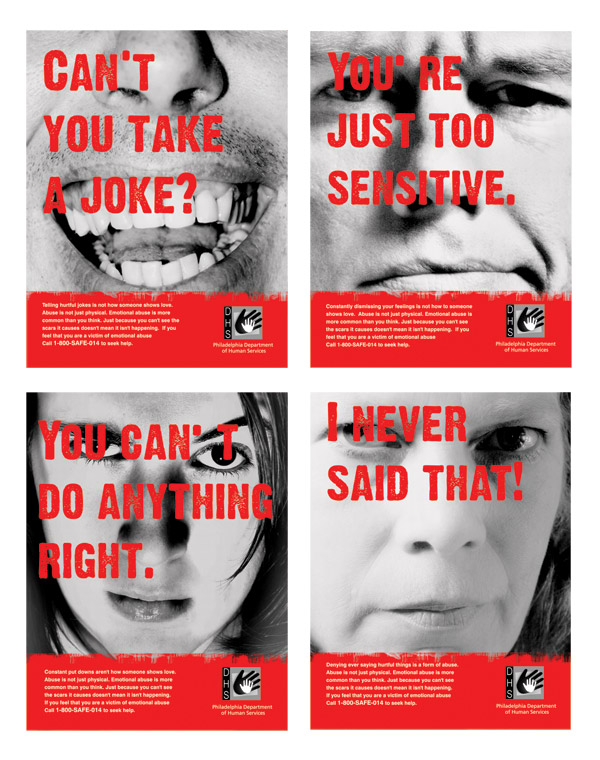
Emotional and mental abusive is often so insidious that it can be difficult to recognize and accept that you are in an abusive relationship. It can also be hard to one day wake up and realize that you let yourself become a victim. Not an easy thing when you thought all along you were the one in control. This type of abuse can take on so many forms that it can be almost impossible to recognize. When I looked back on my marriage, these are the incidents that made me realize that indeed there was abuse in my relationship. They are not an attempt to elicit sympathy but rather a means of showing how obscure abuse can sometimes be.

* Name calling towards me was a frequent occurrence.

* He was frequently badmouthing my family and friends. Every negative comment was an attempt to put more distance between me and them. He made it difficult for me to have people to our home.

* He often criticized my decisions no matter how small.

* He lied on a regular basis.

* He was a “gas lighter”. Gas lighting is a form of psychological abuse in which false information is presented to the victim with the intent of making them doubt their own memory and perception. Because I was starting to have some difficulties with my memory due to an autoimmune disease, it wasn’t too difficult to do. He would say we had conversations that I was sure we didn’t have.

* He did everything he could to bring down my self-esteem. When I went out of work on a medical disability, he told me I was lazy and that there was nothing wrong with me. He used comments to hurt me.

* He withheld affection from me.

* He did not support me. This may seem benign but men who yell at their sick wives and threaten to leave them alone in an emergency room because they don’t want to sit and wait for the doctor any longer would qualify as abuse to me.

I never saw the signs of my ex-husband potentially becoming an abusive partner. I wish I could sit here and tell you that when I looked back, I noticed this, this, and that. But I did not. I am sure there were signs, but I obviously missed them. I also cannot sit here and say there were not good times because there were. He presented his best side to me in the beginning of our relationship. I think he wanted to be the person that his best side showed. However he was plagued by a childhood that haunted him (maybe that was a potential red flag?) and his subsequent alcoholism that cropped up the year after we married consumed him.

So how did I save myself? After years of contemplating leaving, I got out. One night after a daylong drinking binge, two events occurred. The first was that I knew without a doubt that if I didn’t leave our house that night, he would hit me. I was keeping my distance from him and not engaging with him but he was relentless. It had never happened before but I knew this night was going to be different. I wasn’t going to give him that chance and I was no longer going to be a victim. We all have our breaking point and that was mine.

Apparently it was his too because after I left the house that evening, in an effort to manipulate the situation and get sympathy from my parents, he called my family and spoke with my mother. He told her that I had gone off the deep end and was threatening to kill myself. All completely untrue. Imagine having someone call you and tell you that your child is suicidal. Imagine the fear. I was never going to let him terrorize my family like that again. Ever.

At the end of the sermon last Sunday, I realized I truly was at the other side of the battle with my Pharaoh and into what my pastor described as the “Promised Land”. It required a lot of soul searching, therapy, and determination to leave and start over. It has meant forgiving and choosing to remember the good of that relationship without ignoring the bad. Getting to the Promised Land was not just about leaving, it was about rebuilding. It meant finding myself again and regaining my self-esteem before I entered another romantic relationship. It meant defining myself rather than letting someone else define me. Although I am in a very healthy romantic relationship now, being in this relationship is not all that defines the Promised Land for me. The Promised Land is a place where I am whole and at peace.
It is a place where I am not afraid.


Photos: Courtesy of Google Images

Doctor, Please Listen To Me!

Although I talk a lot on this blog about my experiences with an autoimmune disorder called Sjogren’s Syndrome, I have dealt with and currently still deal with a multitude of other medical diagnoses. It would appear that when it came to the luck of the draw in the God designing Christine department, I got the short end of the stick. I was not a particularly sickly child, but once I entered my early twenties, it seemed like every few years a new medical problem reared its ugly head. I am not talking about common stuff either. Oh no, I got the wacky and unusual stuff….Hodgkin’s Disease (which is a lymphoma), AV Nodal Reentry Tachycardia (a defect in my heart’s conduction which required surgery), Factor V Leiden (a genetic blood clotting disorder), and of course the Sjogren’s Syndrome. Throw in some more common diagnoses like Hypothyroidism, Polycystic Ovarian Syndrome, etc. and you have a nice array of specialists that I have to deal with on a regular basis.

There is a point to mentioning all this though. Because of this ridiculous amount of exposure to the health care system as a patient and most significantly because of the challenges I have faced in dealing with doctors regarding the Sjogren’s, I have a very (and I mean VERY) low tolerance now for inadequate and impersonal medical care. As a nurse, I have always been a strong advocate for my patients; at times, even getting myself into a little hot water because I challenged my patient’s doctors when I felt that they were not being attentive or appropriate in their care of my patients. However as a patient, I was not always good at this. I got intimidated easily by my own doctors and always trusted that they knew what was best for me.

Over the past few years this has changed dramatically because, as I mentioned earlier, I struggled so desperately to get the Sjogren’s diagnosis. Heck, I struggled to even get someone to believe there was something wrong with me. And in the end, I listened to my own inner voice. I was relentless in my quest and I finally got an answer.

About a month ago, I woke up with severe abdominal pain that had started a few weeks previous to that day but I had chalked it up to problems with my menstrual cycle. On this day though, I felt that something was really wrong. I called my gynecologist who despite his somewhat impersonal manner, had never done wrong by me. By the time I saw him, I was doubled over in pain. After examining me, he decided I needed an ultrasound which could not be done until the next day. He would not give me anything for pain and said that Tylenol or Motrin should help. It did not.

The day after the ultrasound, I called the office as I was still in some of the worst pain of my life (which is saying a lot!) and I was looking for my ultrasound results. I was told by the nurse that there was small cyst on my ovary that would not be causing me this degree of pain and I needed to follow up with my primary doctor. And of course it was a Friday. I told her that I thought it was gynecological related and as I had issues similar to this previously, but just not as severe. Nope, I still got passed off to another doctor. At this point, I have been in severe pain for forty-eight hours and wished I was dead. My primary doctor was not in the office that day and I decided to go to the emergency room.

The end result of this trip to the emergency room was that I was dehydrated and a CT Scan showed that not only did I have a cyst on one ovary, but I also had a ruptured one on the other ovary therefore validating the high amount of pain I was in. I was told that it would take at least a few days until the pain would subside and they gave me pain medication to get me through the pain and told me to follow-up with my doctor in three days.

I never did go back to my gynecologist. I followed up instead with my primary care who I felt had enough knowledge to see me through the rest of this crisis. See because the problem was, I no longer trusted my gynecologist for many reasons. He knew me well enough to know that I would never be doubled over in pain unless something was really wrong. He did not adequately address my pain issues. He left me like that for over two days and then when I sought his help again, he dumped me on someone else when it was a gynecological problem all along.

I can’t let something like this go. There have been a few rare instances in the past few years where I have disagreed with the way one of my doctors has handled something and after having a discussion about it, it was resolved. But when I looked back to all my interactions with my gynecologist, I realized he sucked as a doctor. My visits were always rushed. I always felt like I was bothering him when I had questions about my treatment. He never seemed to want to address the fact that I have a mother with a history of both ovarian and breast cancer; therefore putting me in a high risk category. He didn’t take  time to do any teaching with me. He knew very little about how significantly my other medical diagnoses were affecting my life. He just didn’t seem to care.

I don’t need each of my doctors to hold my hand and be my friend. But I DO need them to treat me as a person; a person who has been through a hell of a lot medically. I deserve to be informed. I deserve for them to be accountable. I am very well aware of how difficult it is for doctors to practice with all the insurance regulations and productivity requirements. But you know what? There are doctors out there who DO listen to their patients. I know because some of them are my doctors. Never in a million years would my endocrinologist let me leave her office in the kind of pain I was in that day without doing something further.

So what am I to do? What are we to do as health care consumers? We need to stand up and make ourselves heard. We need to tell those that hold our very lives in their hands that we deserve the very best that healthcare has to offer. How do we do this? We screen our doctors before we become their patients. We go to our appointments organized with a medication list and a list of our questions and concerns. We take control of our own health by learning about our various conditions and then committing ourselves to truly getting better, even if it means changing bad lifelong habits. We listen to our instincts when we feel something is wrong with our bodies. We don’t let doctors rush us through office appointments or procedures. When we feel that we are not getting what we need from our providers, we look elsewhere. And we keep looking until we find what we need and what we deserve.

The outcome of my little doctor fiasco was that I immediately started looking for a new doctor. I know there is a stigma attached to patients who “doctor shop” and you know what? I don’t care. You shouldn’t either. It is your body, your life. I am not saying that if issues arise, but yet you trust/like your doctor, that you shouldn’t try to work it out. You should. But don’t let things go. I have been wrong a few times thinking I knew more than my doctor but a good doctor will respect that. It took me changing doctors twice to finally get an accurate cancer diagnosis with the Hodgkin’s disease and five rheumatologists to not only get the Sjogren’s diagnosis, but also to treat it properly. In both instances I am glad that I did not just sit there and trust that the doctor knew best.

I saw my new provider for the first time today for a procedure. She spent quality time with me trying to make sure she had a good history. She asked about my Sjogren’s, how I got diagnosed, and how it has affected my life. She did some teaching with me about not only the procedure but about the possible implications of the results. She was patient. She validated my very appropriate anxiety. She treated me like a person and not just one of her many afternoon appointments.

She knew what she was doing.

She cared.

It was exactly what I was looking for.

Photos :Courtesy of Google Images

Sjogren’s and Disability

I have been reading a lot of posts of the Sjogren’s Syndrome Foundation Facebook page lately about disability for this disorder. People seem to have a lot of questions and comments not only about the process itself of obtaining disability, but also about the journey which is at best, extremely stressful. Having gone through the arduous process myself, I thought it might be helpful to blog about my experience in the hope that someone may find the information useful or at the very least, know that they are not alone in their struggles and frustration with getting through this system.

My journey with disability began in 2008 when I was put on short term disability through my former employer. After a period of time (I believe it was ninety days), it converted to long term disability which was a benefit I had elected through my employer, thank god. What that meant was that a private disability company, contracted through my employer, paid me sixty percent of my previous year’s gross income. Of course I had to get documentation from my doctors and fill out a million forms.

As time went on, it became apparent that I was not going to be able to return to the workplace anytime soon. My long term disability company (Aetna) required that I apply for Social Security Disability (SSDI). The way it was explained to me was that if I was approved for SSDI, Aetna would subtract the amount that SSDI paid me every month from the amount that Aetna paid me so that I would always be earning that sixty percent. I also would be eligible for Medicare if and when I was approved for SSDI.

I first applied for SSDI in October 2009. It required a lot of forms, phone calls, and patience. From what I have read and heard, most people are denied when they apply for SSDI the first time. This is why I was so shocked when in January 2010, I was approved for SSDI. However, the joke was on me. After being on SSDI for about six weeks, I was notified that I was actually DENIED and that my SSDI claim was accidentally approved. The amount of drama and stress this created in my life cannot really even be put into words. It affected my disability through Aetna and caused financial havoc for a year afterwards. I mention this because the only reason I got through it was due to meticulous record keeping on my part.

I appealed the first denial and was denied a second time. The reasons given had to do with the fact that the doctors reviewing my case through Social Security felt that despite my illness and limitations, I should be able to do some type of sedentary work on a full-time basis. I constantly had to justify my symptoms, my illness, and my limitations. A very demoralizing experience I can tell you.

My third appeal involved an administrative hearing with a judge. I was scared out of my mind. Mostly because I didn’t think that I would be able to handle it if I was denied again. I was fortunate enough to have representation at the hearing by a company called Allsup. They are an organization which assists people in obtaining SSDI. I was even luckier because it was Aetna who provided the service free of charge. They had their own interests in mind by supplying this representation because if I received SSDI, that would be less that they had to pay me. However you have to take your help where you can get it and I knew it would benefit me in the long run.

I went to the administrative hearing and in May 2011, I was finally awarded SSDI. I think the best part for me was that I was just relieved to have the process over with. Despite the fact that both SSDI and Aetna review my case periodically and I still could have problems with either in the long run, at least this part of the process was over.

There are many things I learned along my journey of applying and receiving SSDI and they are as follows:

1. As mentioned earlier, keep meticulous records. To start with, get copies of all your medical records. As someone who saw twenty plus doctors, I realize what a task this can be but it pays to have them as a reference. Knowledge is power! Also make sure to document every single interaction you have with anyone related to your claim, especially the Social Security adjuster. Keep track of any monies that are given to you or taken from you. Trust me, mistakes can and will be made so impeccable documentation is a must!

2. Get a doctor in your corner. This is especially important with autoimmune disorders as many times they are not accurately diagnosed and/or symptoms can vary so greatly. If you have a rheumatologist, they are your best bet as they are most familiar with Sjogren’s Syndrome. Make it clear to them that you are applying for disability and that you would appreciate clear documentation in your record as to why you are disabled. When I was approved for SSDI, the judge sent me a very long and detailed letter about how he came to his decision. He said in the award letter that there were two compelling pieces of evidence in helping him make his decision and one of them was letter that my rheumatologist at the time had written about why he thought I was disabled.

3. Many people are under the misconception that SSDI is given out based solely on your diagnosis. I found as I went through the application process that this is not where their focus is. Honestly, I don’t think they care if you have six months to live. What the folks at SSDI are concerned about is how you function on a day to day basis. Make sure to stress this when you are speaking with the folks at SSDI and on your assessment forms.

4. Know why you are disabled. This seems like common sense but you would be surprised. When I was preparing for my hearing, I spent a lot of time thinking about WHY I couldn’t work and I discussed this with my doctor. I can have days and even weeks where even though I still have symptoms, I can get myself through a day and be productive.  However this is because I usually control my environment and all the factors that lead to a flare-up including climate, diet, schedule, and stress. This does not happen in the workplace. More importantly, I cannot reliably and consistently get myself to a job on a full-time basis due to flare ups of symptoms. There is no employer that I know of that would be OK with being out of work as frequently as I would be. Stress these facts during your hearing. It could make all the difference.

5. Be honest. This is critically important. When you are sitting at a hearing, any decent judge is going to be able to tell if you are exaggerating your symptoms/situation. If you are truly unable to work, tell the judge why. Make sure to not leave out any details. Everything counts. When I received my award letter from the judge and he mentioned those two compelling pieces of evidence that helped him make a decision in my favor, the second piece of evidence was my testimony at the hearing. He said that he found me to be forthright and honest about my situation.

The SSDI process is not easy. It takes time, patience, and diligence. Not everyone who needs disability is granted it and there are people receiving benefits who don’t need it (this is not a judgment, but a fact from my conversations with said people). However like everything else we encounter when faced with such a complicated disease like Sjogren’s, we must fight for what we need in order to survive and yes, even thrive.
Persist!
You can do it.
Photos Courtesy of Google Images

Love Notes

He admits when he thinks he is wrong.

He forgives me when I am wrong.
He has made me realize that my sarcasm can hurt and that I need to use it a little more judiciously.
He gets up in the middle of the night to put in a relaxing movie and rub my joints when I can’t sleep from the pain.
He has taught me that age is just a number and that you are never told old to find your one true love, whether it be when you are 39 or even at 53.
He knows that words can hurt and therefore never resorts to name calling in an argument or at any other time.
He rarely raises his voice, especially since he knows it freaks me out.
He understands the value of honesty.
He is not only a good definition of the word “father” but exemplifies what it means to be a “dad”.
He encourages my dreams.
He loves and appreciates my body no matter what size it is but yet supports me in my quest to lose weight and become healthier.
He doesn’t like hospitals but he sits there and holds my hand.
He understands the art of compromise.
He knows when not to ask questions and just let me cry.
He understands the importance of my friends in my life.
He treats my family like they matter and not as a burden.
He showers me with affection.
He makes me want to be a gentler and more patient woman as well as just an overall better human being.
He inspires me to not settle for less than I am worth.
He has shown me that if a man truly wants to be with you, he WILL wait.
He reminds me of what is really important in this world.
He is a lesson to me that relationships and true love are hard work sometimes, but that the tough parts make us stronger.
He doesn’t run when the going gets tough or when I think he would be better off if he did.
He is living proof that all the “good ones” aren’t taken.
He makes me realize that I can love someone who is not perfect and that maybe I need to examine some of my unrealistic expectations.
He makes me think.
He never lets a day go by without making me laugh.
He has proven to me that love truly should not hurt.
He has helped me learn how to live more fully and has taught me that nothing is impossible, especially with love.
1 Corinthians 13


If I speak in the tongues of men or of angels, but do not have love, I am only a resounding gong or a clanging cymbal.  If I have the gift of prophecy and can fathom all mysteries and all knowledge, and if I have a faith that can move mountains, but do not have love, I am nothing.  If I give all I possess to the poor and give over my body to hardship that I may boast, but do not have love, I gain nothing.

Love is patient, love is kind. It does not envy, it does not boast, it is not proud.  It does not dishonor others, it is not self-seeking, it is not easily angered, it keeps no record of wrongs.  Love does not delight in evil but rejoices with the truth.  It always protects, always trusts, always hopes, always perseveres.


Love never fails. But where there are prophecies, they will cease; where there are tongues, they will be stilled; where there is knowledge, it will pass away. For we know in part and we prophesy in part,  but when completeness comes, what is in part disappears.  When I was a child, I talked like a child, I thought like a child, I reasoned like a child. When I became a man, I put the ways of childhood behind me.  For now we see only a reflection as in a mirror; then we shall see face to face. Now I know in part; then I shall know fully, even as I am fully known.


And now these three remain: faith, hope and love. But the greatest of these is love.

« Older posts Newer posts »