For Everything There is a Season

"In order to write about life, first you must live it." ~ Ernest Hemingway

Page 36 of 44

The Help

“Wasn’t that the point of the book? For women to realize, We are just two people. Not that much separates us. Not nearly as much as I’d thought.” ~  Kathryn Stockett (The Help)

“All my life I’d been told what to believe about politics, coloreds, being a girl. But with Constantine’s thumb pressed in my hand, I realized I actually had a choice in what I could believe.” ~  Kathryn Stockett (The Help)

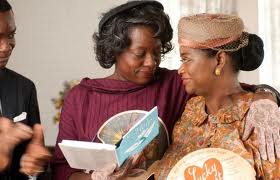
One must be living under a rock these days if they have not heard about Kathyrn Stockett’s blockbuster debut novel entitled The Help. It was recently released as a movie and appears to be a hit at the box office thus far. I am not one to usually devote an entire blog entry to a book or film, but it is one of those stories that just stays with you and hence why I feel compelled to discuss it,;especially since I read the whole 451 pages in a whopping three days. Per usual, I felt that the book was better than the movie.

The story (without giving too much away!) is set in the early 1960’s in Jackson, Mississippi. It is told from the perspective of three women. Two of the women (Aibileen and Minny) are black and work as maids and the third (Skeeter) is a white woman from a prominent white family who employs maids. After coming home from graduating college, Skeeter wakes up to the fact that the black maids are treated very differently than white people. This is initially brought to her attention by her fellow white girlfriends who have started an initiative for all homes in Jackson to have separate bathrooms for the “colored” help based on beliefs that they carry different germs and disease than white people, therefore putting the white people at risk. Skeeter also finds out that her own maid, Constantine, has mysteriously and abruptly left the household. Skeeter, an aspiring writer, disagrees with how the maids are being treated and decides to interview the maids in Jackson about their perspective on working for these white families. The daily lives of these maids as well as the Southern homemakers is explored. The result is a story which delves into the issues of overcoming racial barriers of an extremely racist part of the country during a very volatile time in the history of the United States.

There has been an outpouring of criticism over the book/movie since each of their releases. The reasons are numerous but the some of the most common criticisms have been that the story is racist because it depicts a white woman as the savior of sorts to black women. It has also been said in numerous commentaries that the story is not an accurate reflection of the racial horrors that were occurring in the deep South at that time. From some of the reviews that I have read, it would appear that there are some seriously angry people out there; angry that Kathryn Stockett had the nerve to write a book using dialect of just the black women and not also the southern drawl that we oftentimes hear from Southern white women.

As a background, I am a white woman about the same age as Kathryn Stockett and unlike her, I did not grow up in the Deep South. I never had a maid, unless you want to count my mother. I grew up in a very white neighborhood for most of my childhood and in 1970’s New England, the fact that I had a friend who happened to also be black, was highly unusual. It wasn’t until I went to the University of Massachusetts that I truly understood the racial diversity that exists in this country. I mention all this because I think it makes a big difference in regards to my perspective on the effectiveness of the story.

That being said, here is my perspective on The Help. To begin with, the Help is a work of fiction. Yes, the author grew up in the Deep South, she is a writer, and she grew up with a black maid. I am sure that she drew from some of her childhood experiences when she was writing the book but it is not a memoir. Again, it is a work of fiction.
In regards to the dialect issues, the author is not Toni Morrison or Alice Walker and doesn’t claim to be. But that does not mean that she does not have a right to write a book from the perspective of another race. I cannot sit here and say whether she did it well or not because it is not a dialect I am familiar with or educated about. I do feel that it would have been helpful to have had the dialect of the Southern homemakers dialect consistent with that part of the country. It would have added to the effectiveness of her character.

I do not believe that when Kathryn Stockett was writing this work of fiction, that she meant it to be a social commentary on the civil-rights era. I have to say, when I was reading the book and watching the movie, I was profoundly affected by the story. It opened by eyes even more to some of the atrocities that took place in our country’s history. The history classes I had in high school and the sheltered world I lived in during 1970’s New England time, did not paint a lot of images for me in regards to the civil-rights movement. Despite that the source is Hollywood, I think that this movie did that for me. Being more aware is never a bad thing…ever.

I don’t necessarily see Skeeter as the savior as the black women as the critics have mentioned. Yes, she was the catalyst for the idea of the book but it was Abileen and Minny who were the heroes and saviors in this story. It was they who risked their jobs and their lives to stand up to oppression to tell their story. I find it insulting to their characters that anyone would say otherwise. In addition, one of the issues that I think the critics missed out on was that the heart of this story is the coming together of women from different races and very different backgrounds in an attempt to understand each other and to also make a difference in our world. The male characters were not in the forefront of the story. Skeeter did not run off with the love of her life to have a happy romantic ending. To me, this story is representative of what happens when women cross their social barriers and come together to implement change. Change that can open minds. Change that can alter history.
I am curious to hear what reader’s reactions were to The Help, either the book or the movie. Please feel free to leave your comments below.


Mindful Journey

“The most precious gift we can offer others is our presence. When mindfulness embraces those we love, they will bloom like flowers.”  ~ Thich Nhat Hahn

Journeys…
Trips…
Vacations…
Different words for the same event which are basically opportunities to get away from it all. You figure out where to go, pack your bags, find a dog sitter (well I do anyways) and off you go. You have a specific amount of time ahead of you to explore, relax, or if you are really lucky, a combination of both.

I went on a journey recently. I am calling it a journey rather than a trip or vacation, because I learned something from the six days I got to leave my home. Our journey consisted of spending a few days in Portland, Maine and then exploring back roads through New Hampshire and Vermont on our way to upstate New York to visit Chuck’s two sisters. We didn’t initially plan it this way but we knew we wanted to be in both Maine and New York during his one week off from work and due to health reasons, the eight hour trip was too much for me to do in one day. So that is why we ended up making an adventure out of it. The only definitive plans we had before we got on the road was to participate in a tugboat event for the MS Society and visit his sisters towards the latter part of the trip. That was it. Everything else was based on what we felt like doing when we woke up that day. No expectations, no schedule.  It worked out perfectly because not only did this plan allow for a lot of flexibility in the managing of my autoimmune disorder, but also because it gave me the opportunity to experience the concept of mindfulness.

According to Sylvia Boorstein, mindfulness is the aware, balanced acceptance of the present experience. It isn’t more complicated than that. It is opening to or receiving the present moment, pleasant or unpleasant, just as it is, without either clinging to it or rejecting it. I think that is a great definition but I also like to think of it simply as being present or aware. I don’t think I am alone in the fact that I have wasted a lot of time worrying about the future and over planning things. Being present or aware in the moment you are experiencing doesn’t allow for worry or planning. For years and years, I thought it was the only way to manage my anxiety. But the reality was, the worrying was creating more anxiety.

It is not an easy thing to do, to be mindful of your present and fully absorb your surroundings as well as your thoughts and feelings in that moment. That is why taking a journey is such a great opportunity to do so. In our normal day to day lives, there are so many distractions. For us, the first distraction that was eliminated was Chuck not having to work for nine days. Add to that the elimination of distractions such as maintaining a home, taking care of a dog, managing my multiple medical issues/appointments, church and social commitments and what I found was that I got to be present in moments with him and oftentimes with just myself every day that week. When we came across one of the most beautiful lighthouses I ever could have imagined seeing in Maine, I was fully aware of everything about it from the smell of the ocean water hitting the rocks to the sound of the seagulls flying overhead. Instead of just touring the lighthouse and its stunning surroundings, I was fully experiencing it. I was aware and in the moment.

As Ms. Boorstein states above, sometimes accepting and receiving an experience is not always pleasant. I ran into a situation like that during our journey when I experienced an asthma/allergy flare up one night that was probably the most significant I have had in over a year. One that almost landed me in an emergency room that night. The fact that it was happening so far from home and at such a late hour had the potential to throw me into a tailspin and exacerbate the situation. But I was mindful. I accepted what was happening to me and made changes to accommodate the circumstances. Being mindful enabled me to think clearly enough to make decisions about how to manage the breathing issues without panicking. Yes, between that night and half of the next day, the event did have an impact on what I could and could not do, but I accepted it and moved on. The end result was that not only was I able to finish our journey, but I enjoyed it as well.

I think that mindfulness is essential for not only ourselves, but for our relationships as well. During our time away, it started to become more apparent to me how often I am distracted from being in the moment with my boyfriend when we are home. Sometimes this is unavoidable. A friend calls asking for help or the dog is not feeling well and needs a closer eye. Life gets busy, but it is important that when we are engaged in something together whether it be a conversation or a project, that I am present with him in that moment. I have to be because I will never get that exact moment back. That is not to say that there is not a place for those mindfulness thieves such as television, Facebook, and my Droid phone, but each activity deserves its own mindfulness and a limited amount of it at that. My boyfriend, family, friends, and dog are all much too important to not have me fully present in the moment with them rather than being distracted by all of our modern technology.

When we learn to be more mindful, the moments in our lives become richer. Our relationships take on a different perspective. Whether you call it being mindful, present, or aware, acknowledging our experiences in the present moment essentially helps guide us towards the path of living our lives to the absolute fullest. And well, you can’t really go wrong with that now can you?

Photo: Courtesy of Chuck Myers

Traveling with Sjogren’s

“Strong and content I travel the open road.” ~ Walt Whitman

I am home, unpacked and freshly showered after a six day vacation. I have plenty of stories and photographs to share. I haven’t written since before I left six days ago either for my blog or for one of my various other projects. My plan was to wait until I was more rested but I miss the writing. I caught up over the past two days with Facebook and the blogs I regularly follow. There was a post on the Sjogren’s Syndrome Foundation Facebook page by a woman asking for tips on how to travel with Sjogren’s Syndrome. I am by no means an expert, but over the past year and especially this past week, I have discovered a few helpful hints to make traveling just a bit easier for those of us who struggle with this crazy autoimmune disorder.

Anyone who follows my blog regularly or knows me personally is well aware that I have become an advocate of flying by the seat of my pants when it comes to traveling and life in general lately. No hotel reservations, unplanned road trips, the list goes on and on. This actually works better for me than my old way of planning because most of the time, I never know from day to day how I am going to feel.  However the ONE area I plan whether I am going away for one night or for six is in the traveling/vacationing department so I can make sure I have everything I need to manage my illness. These are tips that I have personally found to be useful:

* Make a list so you don’t forget anything.

* Bring an extra supply of important medications such as inhalers and steroids. You never know when you are going to get stuck somewhere and that way you can avoid the hassle of transferring prescriptions and calling doctors while on vacation.

* Make sure to have a written copy of your medications on you in case of emergency. Don’t rely on memory, especially since you may not be with the program enough to recite them back if god forbid you are in an emergency room or ambulance. Or if you have brain fog like I sometimes do.

* Whether it is by air or by land, traveling is exhausting. Sjogren’s sufferers need rest and lots of it, even when they are in their normal routine. It is very easy to get caught up in the excitement and the on-the-go momentum of a trip or vacation. Try to break up your days with rest periods and keep to your usual sleep habits. Reality is if you don’t get the rest you need, you are going to have a flare and/or burn out before the end of your trip

* Try to keep a routine on your trip when it comes to your medical needs. I have a very specific morning and bedtime routine at home and I try very hard to keep this the same when I am on the road. Examples of this are taking my medications on schedule, eating at my regular meal times, using warm packs/massage for my salivary glands. I do this because if one thing is missed, it can be a catalyst for a flare.

* Be aware of your environment. One of the biggest enemies is dryness and it is found everywhere. From airplanes to dry climates to hotel air conditioning, oftentimes our surroundings when we are on the road are less than ideal. Bring moisturizers for everything-your eyes, nose, lips, skin, mouth, etc. Remember that you are not always on control of your climate like you may be at home.

* Protect yourself from the sun. I am not sure how many Sjogren’s sufferers out there have issues with the sun like I do but it is significant enough for me to mention it. I have very fair skin to begin with and have always had to be more cautious in the sun than the average person. However since my Sjogren’s symptoms started, my sun sensitivity has increased ten-fold, at least. I can get a rash and/or sunburn with just five minutes of sun exposure and no sunblock in July. So protect yourself. Frequent sunblock is a good start but if you are like me, it is not enough. Just being in direct sun for too long causes symptom flare up so plan activities accordingly. Seek shade whenever possible. Hats, sunglasses, and bathing suit cover ups are a necessity. Try to avoid the sun from 11am-3pm which are peak exposure times.

* Water is your friend. Drink lots of it. One of the reasons I prefer road trips to flying is because I can leave a case of bottled water in the trunk (cheaper too) and stay hydrated. Once my body doesn’t get enough to drink, joint pain, difficulty breathing and the like are right around the corner. Invest in a travel cooler. I found a soft lightweight medium sized one with a shoulder strap that holds about twelve sixteen ounce bottles plus ice. It goes with me anytime I am away from home for more than one day.

* Bring a humidifier, even though it may be a pain to transport. I use a humidifier every night at home and I have tried to travel without it with poor results. Hotel rooms are notorious for being dry and changes in weather/climate can make dryness symptoms even worse. There are travel size humidifiers on the market but I had a disastrous experience with one last year and have found it easier to bring my one from home which I am in love with anyways.

* Keep a Sjogren’s kit of essentials for your purse, overnight bag, backpack, etc. I have found that it makes it easier when traveling to have a small kit that can be moved from place to place easily. My essential items include a single square pill holder big enough for several Motrin and emergency pain medication. It also holds a bottle of eye drops, lip balm, sugar-free lemon drops, gum, small tube of saline nasal gel, tissues, travel size bottle of sunblock, a rescue inhaler, and hand sanitizer.

I am very interested in hearing reader’s tips for traveling with Sjogren’s Syndrome or any other chronic illness. Please post any suggestions on the comment section below!

Photo: Courtesy of Chuck Myers

Reflections on Dad

“My father gave me the greatest gift anyone could give another person, he believed in me. ” ~ Jim Valvano

Did you ever have a person say something trivial to you and it triggers a whole thought process? This morning my boyfriend, Chuck, sent me an e-mail saying that an animal of some sorts got into our trash last night and made quite the mess. He then suggested we put some bleach in the large trash container to help with the smell and discourage the critters who roam around on our wooded property. My first immediate reaction, which I of course told him in my reply, was that we should use ammonia instead. My dad always poured ammonia on the garbage on trash day when we were growing up. And it always worked. I can still distinctly remember that smell…

Today my father turns sixty-four years old. I find it difficult to wrap my head around that idea. I am well aware that both of my parents are getting older and not as invincible as I once thought they were. I am also reminded lately of the fact that the day is drawing nearer where I am going to be looking after them more than they are looking after me. But oftentimes in my head, my dad is still the thirty something guy riding the old wooden roller coaster with me at Mountain Park. He is the young dad chasing the two punk kids who stole my little brother’s bike through the streets of West Springfield. He is the dad who made sure that I knew the only way to succeed in life was through hard work.

When I was young, I was always compared to my mother both in relation to personality characteristics and physical attributes. Not that I am complaining! I do possess a lot of her wonderful qualities and I am so grateful for that. As I got older though, I realized that I possessed just as many of my dad’s qualities…

 His need for neatness and order.

 His loyalty.

 His ability to laugh freely.

 His tenacity.

 His sense of humor.

While planning my parent’s fortieth anniversary party last November, I was going through old photographs and it was shocking to me when seeing photographs of him in his younger years, how similar we do look. Seeing his smile in those pictures was just like looking into a mirror. I had never quite noticed that before…

As the years have gone by, I have learned the art of accepting people for who they are and my father is no exception. He is not an openly emotional person and oftentimes a man of few words. I am completely the opposite in that regard, sometimes wishing I could be less emotional. As I have struggled through one personal crisis after another in recent years though, my father has always been my silent supporter. Even without words, I know he believes in me. I am not sure exactly how I know this. Maybe from statements my mom has made to me. Maybe from comments I have heard him make to my doctors. Maybe just from his silent presence when he helped me move after my divorce. Regardless of how I know, the fact remains…I do know.

So on this day, I wish my father the happiest of birthdays. I remind myself of how grateful I am that he is still here to share another year with us and how grateful I am to be his daughter.

Final Diagnosis

       When the world says, “Give up,”
       Hope whispers, “Try it one more time.” ~ Author Unknown
“When it is dark enough, you can see the stars.” ~ Ralph Waldo Emerson

It has been three years and eight months. That is forty-four months of doctor’s visits, difficult procedures, emergency room visits, and hospital stays. One hundred and seventy-six weeks of tears, doubt, frustration, and anxiety. And approximately one thousand two hundred and thirty-two days of hope.

Hope for an answer. An answer that will give my illness a name. One that will give me credibility. One that will take the place of a doctor who says “I don’t know” or “all your tests are negative.” One that once and for all, will allow me to go through life without so many unanswered questions about my body.

I got my answer this past Thursday at an appointment with my rheumatologist. It wasn’t really supposed to be a shocking answer to the big question of what disease has plagued me for so many years. The first mention that I may have an autoimmune illness called Sjogren’s Syndrome was about in 2009, when I was seeing my previous rheumatologist Dr. Monarch in Boston. The problem was that the blood work for the disease was negative and continues to be so to this day. However he felt that due to the nature of my symptoms and the fact that they couldn’t come up with another diagnosis, Sjogren’s was the likely answer. I even had a lip biopsy done to try and prove his theory as a lip biopsy was the diagnostic gold standard for Sjogren’s Syndrome. But of course, it came back negative and the only answer I had was that I could still have the disease with a negative lip biopsy which although rare, is possible.

Despite being told that there were no doctors in the United States that specialize in Sjogren’s, I found a rheumatologist in Hartford who specializes in the disorder. Within months of seeing this new doctor, pieces began to fall into place, pointing us in the direction of a diagnosis. I had a nuclear medicine scan of my salivary glands that was suggestive of Sjogren’s and within a few months of the scan, I began to have difficulties with my parotid and other salivary glands, which along with my other autoimmune appearing symptoms, made me relatively sure that we were on the right path after all.

But there was always doubt. The doubt began five rheumatologists ago (I have seen over twenty specialists overall) when the first one I saw looked at my very painful fingers/hands and told me he didn’t think this would turn out to be an autoimmune disorder because my hands weren’t swollen and my labs were normal. Doubt continued to grow doctor after doctor, test after test, as a prominent Boston pulmonologist told me that my breathing issues were in my head. Doubt plagued me as I would go sit in my car after each appointment and just cry. Cry because I was so frustrated knowing how sick I was and yet not being able to prove it most of the time. Cry because it was suggested that I follow up with a psychiatrist for possible conversion disorder and depression. Cry even harder because I did have a history of depression and was even told that I had bipolar disorder, only to find out from the same psychiatrist that he believed my mood issues to be related to the autoimmune disorder.

But yesterday I was vindicated. My new rheumatologist, Dr. Parke, had suggested to me months ago that I should consider a repeat lip biopsy. There was always a question for me (and possibly for her too) that because I did not have dry mouth as a symptom when I had the first biopsy done, that was the reason it was negative. After doing a lot of research through the Sjogren’s Syndrome Foundation, I was also concerned about the technique used to perform and analyze the biopsy when it was done the first time. There is a very specific standard used for taking the sample and analyzing it. Dr. Parke and her pathologist at UCONN had successfully done this numerous times before. We decided to go ahead and do the second biopsy. The results were not going to change much in terms of my treatment; Dr. Parke was still going to treat me as a Sjogren’s patient if the results were negative. However a positive result would make me eligible for participation in clinical trials if I so chose and the benefits for me mentally and emotionally were immeasureable.

I went into my appointment yesterday not even expecting the results to be ready as Dr. Parke had warned me that it could take several weeks. But the results were in. I had Sjogren’s Syndrome. And all I could do within seconds of her telling me that was cry. I cried again in the parking garage for a good ten minutes before I could even get back on the road and I cried on and off all the way home, as well as the rest of the evening. I was shocked. As much as I had hoped for an answer, I never expected to get one.

I never expected my response to the news to be that emotional. It was (and still is) this weird combination of relief, joy, sadness, and anger all at the same time. I am not even sure anyone can understand it unless they have been in a similar situation. I know with one hundred percent conviction what I am battling. I can look at my doctors differently because I am not always sitting there in fear over how they perceive me. I have credibility with the medical profession as a patient. I know without a doubt that I will be taken more seriously when I show up in an emergency room or in front of a new medical professional.

I don’t want this to sound like because of the diagnosis, I feel like I can now be identified or defined by my illness. I have tried for years not to let that happen and I am not about to start now. If anything, the opposite is true.

 I am free.

I am free from the questions and speculation. I am free from doubt. I am free from being a hostage to a medical system that frequently makes judgments of its patients just because they cannot find the right answers. Well, at least for now. Most importantly, I am free from myself. I can spend less time looking for answers and more time fixing what is wrong with me.

And yes, there is still a lot wrong with me. The sadness/anger aspect of my emotional reaction to this diagnosis is very real. When I heard the news Thursday, it brought back every bad memory I have had dealing with this illness over the past several years and trust me, there are many. It reminded me of how I let very educated professionals make me doubt myself at times. It reminded me of days, before anyone would even treat my symptoms, in which my mother had to help me bathe myself and go to the bathroom because I could not use my feet and hands to do it for myself. Of countless hours in the emergency room being poked and prodded. Of losing my job of ten years as a pediatric nurse because I could no longer get to work on a regular basis.

Yes, it is best for me to have a diagnosis but somewhere in the back of my head, I always hoped that someday, this would all just go away. All of it. I envisioned waking up one day and I would be symptom free and we would be able to look back and say we didn’t know what it was but now it’s gone. Unrealistic? Of course. But now I know for sure that will never happen. I have a chronic autoimmune illness that has no cure or even approved treatment for. I will have it for the rest of my life. I think that deserves a certain amount of sadness and anger, but not for too long.

That being said, getting that diagnosis yesterday was also a strong reminder of how far I have come and what kind of person I have evolved into. I no longer need my mother to help me shower every single day. I can leave my house most of the time when I need to. I am seen by a medical professional now maybe every two weeks instead of several times a week. I still cannot work, but when I am well, I am able to be of service to people in small ways. My life has a purpose other than being a patient.

I have used this adversity to become a much stronger and self-reliant person. I am bold. I don’t take my good days for granted. I live my days like they count because I never know when a bad day is going to come. Struggling for a diagnosis has taught me patience, courage, and perseverance. It has taught me greater compassion for others. The quest for a diagnosis has taught me that doctors are human; they are not God and therefore we cannot expect them to act as such. And probably most importantly, this experience has taught me the power of faith and prayer. For that, I am most grateful.

« Older posts Newer posts »